Loading...
Serving Johnston, RI and surrounding areas. (401) 586-9004
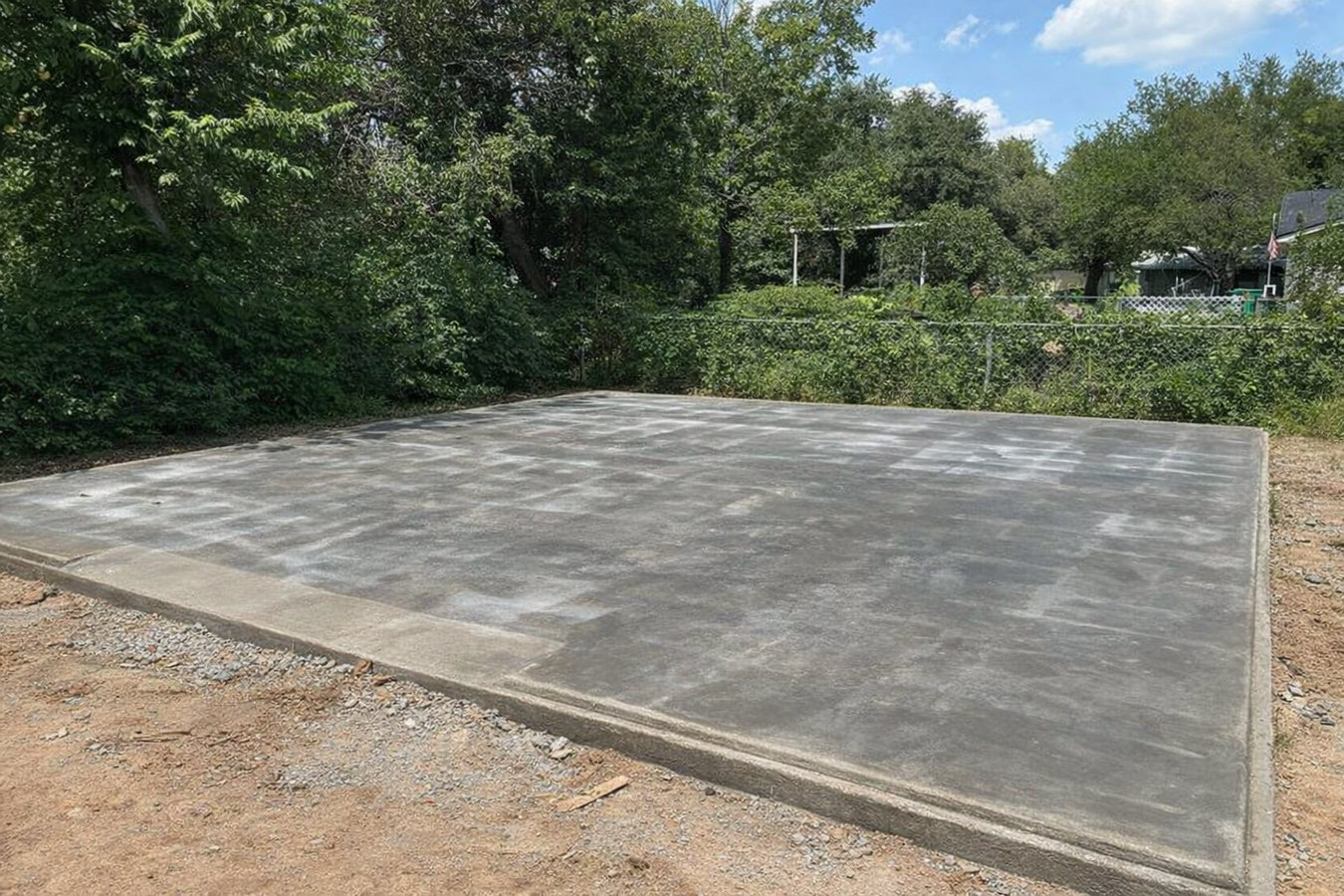
A slab foundation is the base everything else depends on. We pour reinforced concrete slabs in Johnston that are built for this climate - properly prepped, properly reinforced, and ready to carry your structure for decades.
Slab foundation building in Johnston, RI means grading and compacting the site, laying a gravel drainage bed and moisture barrier, placing steel reinforcement, and pouring a single thick concrete pad that serves as both the floor and the structural base - most residential projects run one to two weeks from site prep to a cured, permit-ready slab.
If you are adding a garage, sunroom, workshop, or accessory structure to your Johnston property, a proper slab foundation is the first step before any framing begins. Many Johnston homes were built between the 1950s and 1980s, and additions from that era were sometimes poured without the soil prep or reinforcement that modern work requires. If you are finishing a space or replacing an aging slab, the condition of what is underneath matters as much as the concrete itself. For projects that also need deep support below the slab, take a look at our concrete footings work, which we often coordinate alongside a slab pour.
If you are adding a garage, workshop, or accessory structure to your Johnston property, you need a concrete slab foundation before framing can start. No structure should sit directly on bare soil - without a proper base, it will shift, settle, and deteriorate. A permit is required in Johnston, and an inspector will check the footing and slab before the project moves forward.
Small hairline cracks in a slab are normal, but cracks you can fit a pencil tip into - or areas where one section of the slab sits noticeably higher or lower - suggest the slab has moved or settled unevenly. In Johnston, this kind of movement is often linked to the variable glacial soil underneath, which shifts as it absorbs and releases moisture through the seasons.
When a slab settles unevenly, the walls and door frames above it shift slightly out of square. If doors that used to close easily now stick or drag, or if you notice gaps forming at the tops of door frames, the slab beneath may have moved. This is worth having a contractor assess before the problem develops further.
Johnston's hilly terrain and clay-heavy soil can cause water to collect against the edge of a slab rather than drain away. If you regularly see standing water along the foundation edge after rain or snowmelt, the slab's drainage may be inadequate. That moisture will work its way into cracks and cause serious damage once the temperature drops and it freezes.
We handle the full scope of residential slab foundation projects in Johnston - from single-car garage pads to larger addition slabs and accessory dwelling unit bases. Every slab we pour includes a compacted gravel sub-base, a polyethylene moisture barrier, and steel reinforcement inside the concrete. We also make sure the slab edge footings are thick enough to carry wall loads, because a uniformly thin slab without reinforced edges is one of the most common shortcuts that leads to early failure. For projects that connect to a larger structure, we coordinate slab work with our foundation installation service so the two systems tie in correctly and pass inspection together.
We pull the required permit through Johnston's building department before any digging starts, and we coordinate the staged inspections - footing check before the pour, and final sign-off after curing - so you are never in a position where work has to stop because paperwork was not in order. After the pour, we apply a curing compound or insulating blankets depending on the season, and we grade the area around the slab so water drains away from the structure rather than pooling along the edge.
Best for homeowners adding a new attached or detached garage to an existing Johnston property.
Best for sunrooms, workshops, and home additions where the new slab needs to tie in alongside an existing foundation.
Best for sheds, workshops, and outbuildings that need a stable, level concrete base instead of bare soil.
Best for existing slabs with widespread cracking, settling, or drainage problems that make a fresh pour the more practical choice.
Johnston experiences genuine winters - hard frosts, repeated freeze-thaw cycles, and ground temperatures that drop well below freezing from November through March. Fresh concrete that freezes before it cures loses strength and can crack or crumble. This means the safe window for pouring without special precautions runs roughly from late April through October. A contractor who does not account for this - or who cannot explain their cold-weather protection plan for shoulder-season pours - is taking a risk with your foundation. The glacial till that makes up much of Johnston's soil adds another layer of complexity: clay-heavy spots hold water and can shift seasonally, so site assessment and compaction matter as much as the concrete mix itself. Homeowners in North Smithfield and Smithfield deal with the same soil and climate conditions, and we bring that same local awareness to every project across the area.
Johnston's housing stock also skews older - many homes were built between the 1950s and 1980s, and a lot of slab work in town involves additions or replacements rather than new construction from scratch. That means tying a new slab into or alongside an existing structure, which requires a different skill set than a standalone pour on bare ground. Rhode Island building permits are required for any new foundation, and Johnston's building department enforces staged inspections. That process protects you by ensuring the reinforcement and footing depth are checked before concrete covers them. Any concrete slab contractor proposing to skip the permit is creating a problem that will surface when you try to sell the property.
We schedule a visit to your property - not just a phone quote. We look at the site, assess the soil and drainage, and give you a written estimate that breaks down what is included. You will hear back within one business day of your initial contact.
We submit the permit to Johnston's building department on your behalf before any digging begins. Once the permit is issued, we excavate, grade the site, compact the soil, and lay the gravel drainage base and moisture barrier. This phase typically takes one to three days.
Pour day is the most active day of the project. Concrete trucks arrive, the crew fills the forms and finishes the surface. A building inspector will have already signed off on the reinforcement before this step - that checkpoint is required before concrete goes in.
After the pour, we protect the slab with curing compounds or insulating blankets depending on the season. You can walk on it within 24 to 48 hours. We coordinate the final inspection with the building department, and you receive documentation that the work is permit-compliant.
We give you a written estimate after visiting your Johnston property - no phone quotes, no surprises.
(401) 586-9004Johnston's glacial till means the ground under your slab may look fine on the surface but have soft or water-retaining spots underneath. We evaluate actual soil conditions on your specific lot before placing reinforcement - which means the slab sits on a stable, properly prepared base rather than on a guess.
We pull every required permit through Johnston's building department before any work begins and coordinate all staged inspections ourselves. You receive the paperwork when the job is complete. Your foundation is on record as built correctly, which matters at closing if you ever sell.
Rhode Island winters are hard on fresh concrete. We plan every pour around the seasonal forecast and use insulating blankets and curing compounds to protect slabs poured in cooler weather. The Portland Cement Association provides the technical standards we follow for cold-weather concrete placement.
We have worked across Johnston - from the older neighborhoods near Atwood Avenue to larger lots further from town. We also serve North Smithfield, Smithfield, and surrounding communities, so we know what the soil and climate conditions look like on both sides of any property line.
Every slab we pour in Johnston is built with the same attention to soil prep, drainage, and reinforcement - whether it is a single-car garage or a larger addition. That consistency is what makes the difference between a slab that holds up for 30 years and one that starts cracking in the first five.
For technical standards on residential concrete construction, see the American Concrete Institute. Rhode Island contractor licensing can be verified through the RI Contractors' Registration and Licensing Board. Building permit requirements are administered by the Rhode Island Building Code Commission.
Full residential foundation installation for new construction and replacement projects across Johnston and surrounding communities.
Learn MorePoured concrete footings dug below the frost line to give walls, posts, and piers a stable load-bearing base in Johnston's freeze-thaw climate.
Learn MoreOur spring calendar fills up quickly - reach out now to lock in your build date before the season gets away from you.