Loading...
Serving Johnston, RI and surrounding areas. (401) 586-9004
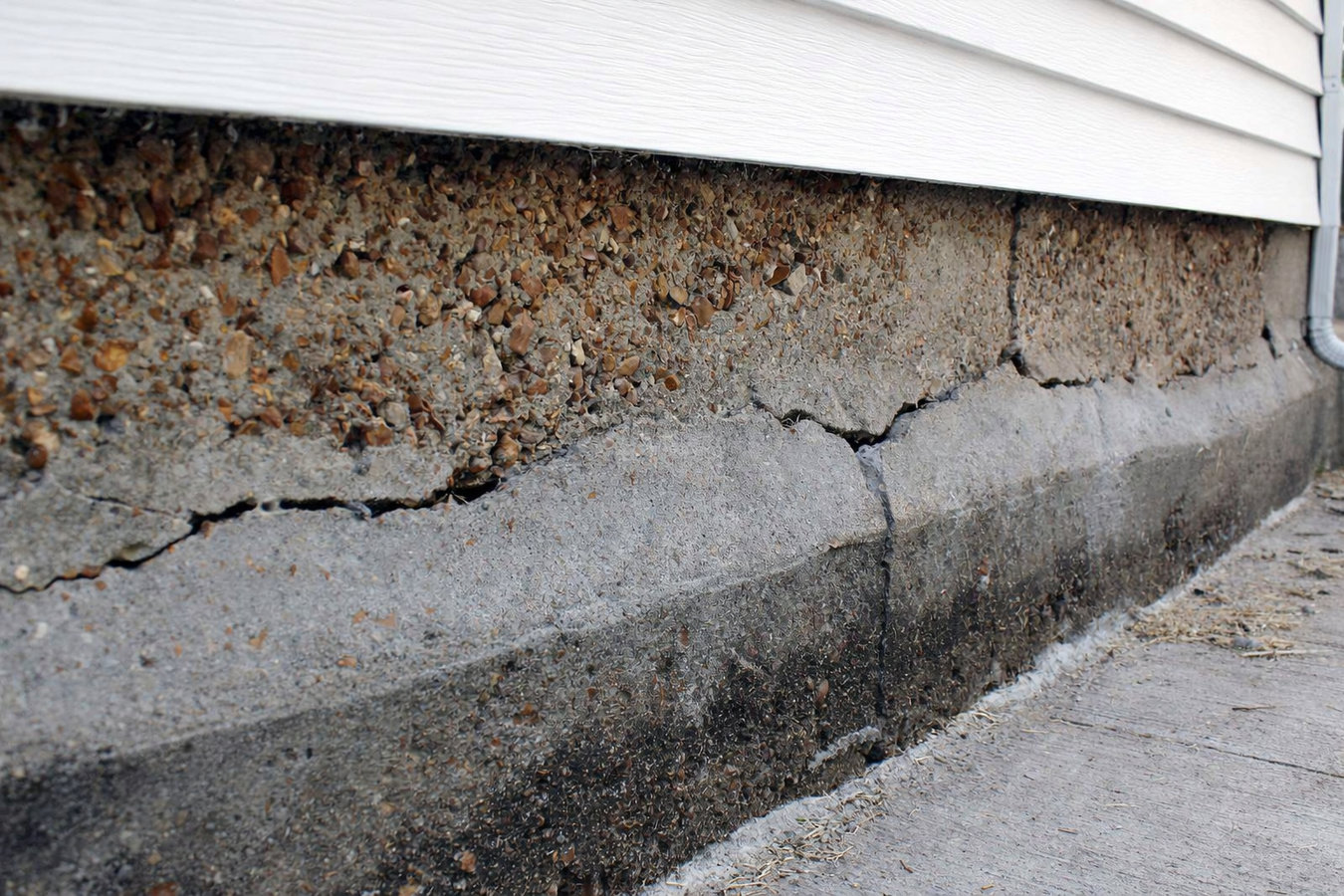
A sinking foundation does not always mean full replacement. We raise sunken slabs in Johnston, RI using proven lifting methods, assess what caused the problem, and give you a clear path forward - without the cost and disruption of tearing everything out.
Foundation raising in Johnston, RI is the process of lifting a sunken or uneven concrete slab back to its original position by injecting material underneath it to fill the empty space and push it upward - most residential jobs are completed in one to two days without heavy demolition or full replacement.
If you have noticed a floor that feels uneven underfoot, doors that have started sticking, or gaps forming between your front steps and the house, the soil beneath your slab has likely shifted. In Johnston, where freeze-thaw cycles repeat every winter and a large share of homes were built before 1985, this kind of gradual settling is common. Raising makes sense when the concrete itself is still structurally sound - it simply dropped out of position. If the project turns out to involve broader foundation work, we also handle full slab foundation building so you have one contractor who can assess the complete picture.
Walk slowly across your basement floor, garage slab, or front walkway and pay attention to any spots that feel lower than the surrounding area. A dip or tilt you can feel - even a small one - is a sign that the concrete has dropped in that spot. In Johnston homes built before the 1980s, this kind of gradual settling is common and often goes unnoticed until it becomes a tripping hazard.
When the foundation beneath part of your home shifts, the structure above it shifts too. If a door that used to swing freely now drags on the floor, or if you can see a gap forming between a window frame and the wall, the foundation may have moved. This is one of the most reliable early warning signs that something is happening below the surface.
Small hairline cracks are normal in older concrete, but cracks that are wider than a pencil tip, run diagonally, or have grown since you last looked deserve attention. Johnston's freeze-thaw cycles each winter put repeated stress on concrete, and cracks that appear or widen after a cold season are often a sign that the ground underneath has shifted.
A gap between your front steps and the house, or between a patio slab and the foundation wall, is a clear sign that one surface has moved relative to the other. This kind of separation happens when the soil under the steps or patio settles faster than the soil under the house itself - a common finding in Johnston neighborhoods where landscaping has changed how water drains.
We assess your slab, determine what caused the settling, and recommend the lifting method that fits your specific soil conditions - either traditional mudjacking or polyurethane foam injection. Our crew drills small holes through the concrete, injects the lifting material, and patches the holes cleanly when the work is done. You will see small marks where the holes were, but a properly patched job leaves those barely noticeable. Every estimate comes after an on-site visit, not a phone quote - because foundation conditions vary too much to price accurately from a description alone. If the assessment reveals that the slab itself is too damaged to raise and a replacement is the better long-term answer, we handle concrete cutting as part of that removal and replacement process.
We walk you through what caused the problem and what you should do to prevent it from returning - whether that is a drainage fix, a grading correction, or something else. A repair that does not address the root cause will settle again. If the scope of work requires a permit from Johnston's Building Inspection Division, we handle that application and coordinate any required inspections before work begins. We give you a clear written price after the assessment so there are no surprises when the invoice arrives.
Best for homeowners who want a lower upfront cost on a stable-soil site and do not need the area usable within hours of the job completing.
Best for sites with clay-heavy or variable soil where a lighter material reduces load risk, or where a faster cure time is important.
Best for interior slabs that have settled unevenly, creating low spots, tripping hazards, or drainage problems in an enclosed space.
Best for exterior concrete that has pulled away from the house or dropped below grade, creating a gap or tripping hazard at the entry.
Johnston sits in a climate zone where temperatures regularly drop below freezing from November through March. That repeated freezing and thawing is one of the most destructive forces concrete faces - the ground expands and contracts, pushing and pulling at whatever sits on top of it, season after season. For homeowners here, that means foundation settling is not unusual - it is an expected byproduct of Rhode Island winters and a housing stock where many homes were built between the 1950s and 1980s, when soil preparation and drainage standards were less rigorous than they are today. If your home falls in that era, the odds of some settling having occurred are meaningfully higher than for newer construction. Homeowners in North Providence and Cranston face the same combination of older housing stock and freeze-thaw conditions, and we work across those communities with the same approach.
Rhode Island's soils are largely glacially deposited - a mix of sandy loam, clay, and gravel left behind by the last ice age. Clay-heavy soils swell when wet and shrink when dry, which creates movement beneath slabs over time. Johnston averages around 50 inches of rainfall per year, and spring snowmelt adds another surge of ground moisture. That saturation is when soil erosion and void formation beneath slabs accelerates most. Contractors in the area tend to book up in April and May as homeowners discover new damage after the winter - scheduling an assessment before peak season saves weeks of waiting and catches problems before they worsen through another wet spring. For authoritative information on residential foundation repair standards, the National Foundation Repair Association is a useful starting point.
When you reach out, we will ask where the problem is, how long you have noticed it, and whether there are any visible cracks or gaps. You do not need technical language - just describe what you see. We respond to new inquiries within one business day.
We come to your home and walk the affected area with you. We look at the slope of the slab, probe for soft spots, check for cracks, and assess what is causing the problem - drainage, soil erosion, or something else. You leave with a written estimate, not a ballpark.
If the scope of your project requires a permit from Johnston's Building Inspection Division, we handle that application for you. Spring and early summer are the busiest season in Johnston, so booking early helps lock in a date before the schedule fills.
The crew drills small holes, injects the lifting material, and patches the holes when the slab is level. Most residential jobs in Johnston are done in a single day. We walk you through what was done and tell you when the surface is safe to walk or drive on again.
Free on-site assessment. Written estimate before any work begins. No pressure, no obligation.
(401) 586-9004We do not give phone quotes for foundation work. Every estimate comes after we have walked your property and assessed what is actually happening beneath the slab. That means the number we give you reflects your situation - not a range pulled from a general cost guide.
We are registered with the Rhode Island Contractors' Registration and Licensing Board, which is a legal requirement for residential work in the state. You can verify any contractor's status on the board's website before you hire - and you should. It is a two-minute step that protects you from unlicensed operators.
Many homeowners have had foundation work done only to see the same issue return because no one explained what caused it. We walk you through what was happening beneath your slab - whether it was drainage, eroding soil, or something else - and tell you what steps can protect the repair long-term.
Johnston's glacially deposited soils vary across the town - gravel in one yard, clay pockets in the next. We assess soil conditions before recommending a lifting method because the wrong approach on unstable soil can fail faster. That local knowledge matters when you are choosing between mudjacking and foam injection.
These are not generic promises - they are the specific things Johnston homeowners tell us they wish they had known when choosing a contractor the first time. We aim to be the contractor you call once, not the second contractor fixing what the first one missed.
When a slab is too damaged to raise, concrete cutting removes the failed section cleanly so a proper replacement can be poured.
Learn MoreFor projects that need a new concrete slab poured from scratch rather than a lifted repair.
Learn MoreJohnston contractors book up fast in April and May - lock in your assessment now so a wet spring does not deepen the problem before we can get there.