Loading...
Serving Johnston, RI and surrounding areas. (401) 586-9004
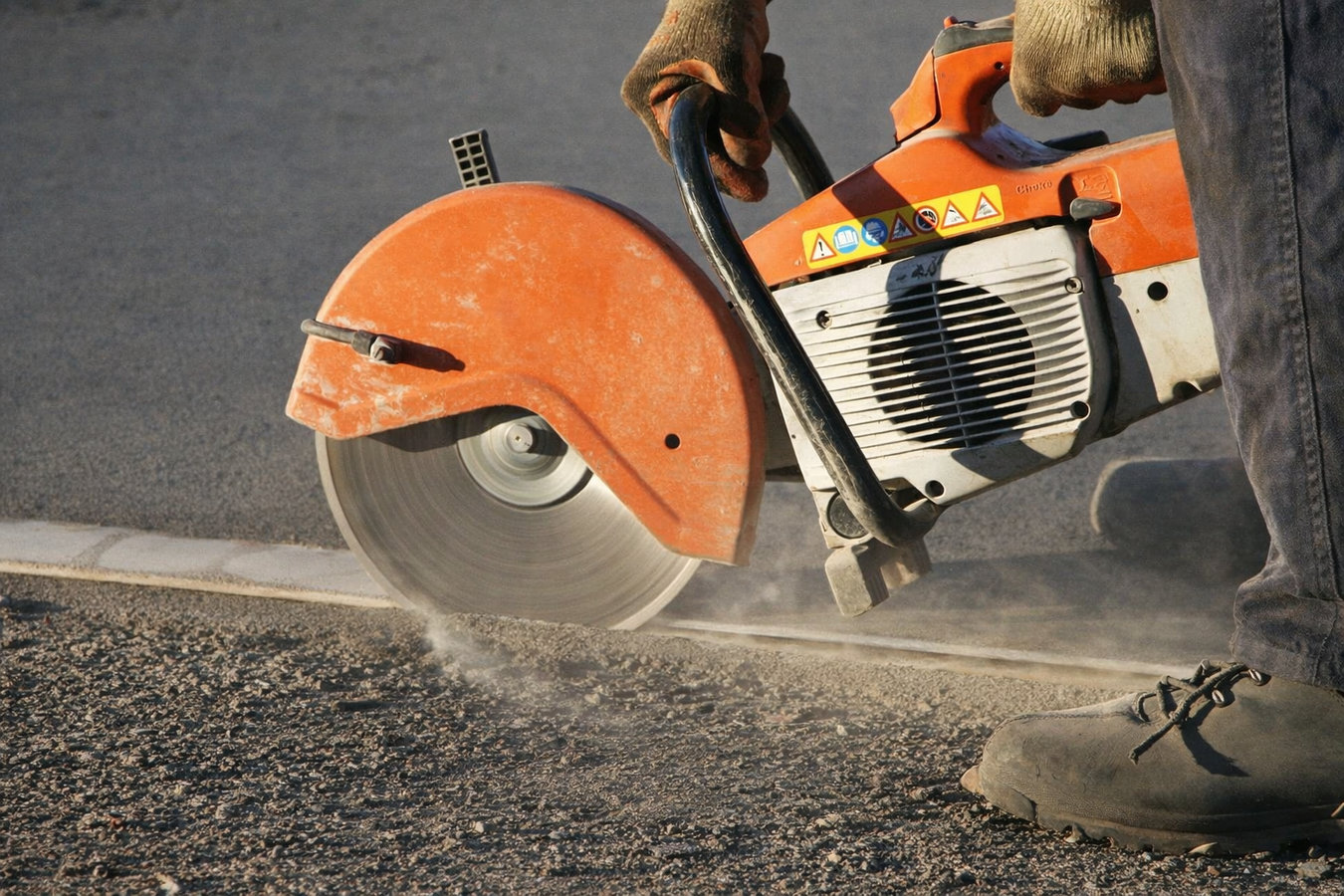
Whether you need a trench cut for a basement drain, a section of damaged driveway removed, or expansion joints added to a slab, we use diamond-blade equipment to make clean, controlled cuts in Johnston, RI - with dust suppression, permit handling, and full site cleanup included.
Concrete cutting in Johnston, RI is the process of using diamond-tipped saws and drills to slice through hardened concrete precisely and cleanly - for drain trenches, damaged section removal, expansion joints, and utility access openings - with most residential jobs completed within a few hours to a full day, depending on scope.
This is not demolition. The goal is a straight, controlled cut that stops exactly where it is supposed to without cracking the surrounding slab. Johnston homeowners call us for two main reasons: planned projects like adding a basement drain or utility line, and repair work where freeze-thaw damage has opened cracks wide enough that patching no longer holds. If the cutting is part of a driveway repair, we can also handle the full concrete driveway building scope - removing the failed section and pouring a properly cured replacement, so the job is handled start to finish by one crew.
If you noticed a crack in your driveway or basement floor last fall and it looks noticeably wider or longer now, the freeze-thaw cycle has been working on it all winter. Johnston winters are hard on concrete, and cracks that are left alone tend to grow, not heal. A contractor can cut out the damaged section cleanly so it can be properly repaired before next winter makes it worse.
Rhode Island's spring thaw and heavy rain seasons send a lot of water into the ground. If you are seeing water on your basement floor after storms, cutting a trench for a drain line or sump pit is often the solution - and that starts with a precise cut through the concrete floor. Older Johnston homes without modern drainage are especially prone to this problem.
When the ground beneath a concrete slab shifts from frost heave or soil settling, the slab above it can crack, tilt, or buckle. If you can see a section that is clearly higher or lower than the rest, or that rocks when you step on it, that section likely needs to be cut out and replaced rather than patched over.
Any time you want to add a drain in a space that does not already have one, the concrete floor has to be cut to run the new drain line. This is one of the most common reasons Johnston homeowners call a concrete cutting contractor - it is a planned project that requires professional equipment to do cleanly without damaging the surrounding slab.
We use diamond-tipped blades and drill bits to make clean, straight cuts through concrete slabs of varying thickness - with water flowing over the blade throughout the job to control dust and protect the surrounding surface. Before the saw runs, we assess the slab thickness and check for any reinforcing steel inside the concrete. Older Johnston homes often have thinner basement floors than newer construction, and setting the cut depth correctly from the start is what keeps the surrounding slab intact. We mark the cut lines on the concrete before starting, and we ask you to confirm those marks look right before the work begins - it is far easier to adjust a chalk line than a finished cut. For larger projects that involve cutting and then rebuilding, our concrete parking lot building work follows the same precision approach on commercial-scale pours.
Dust suppression is standard on every job. Wet cutting keeps fine concrete dust out of the air, which is a health concern - particularly in enclosed spaces like basements. When the cutting is done, we clean up the wet slurry from the work surface before we leave. If a permit is required because the cutting is part of a larger project involving plumbing, electrical, or utility work, we handle the permit application through Johnston's Building Inspection Division and coordinate any required inspections. You should not have to navigate that process yourself. The OSHA crystalline silica standard governs dust control requirements on concrete cutting work - another reason to choose a contractor who takes wet cutting seriously.
Best for cutting trenches in basement floors or driveways - the most common residential application, using a walk-behind saw on a horizontal surface.
Best for creating round openings through slabs or walls to pass pipes, conduit, or other utilities through concrete cleanly.
Best for driveways, walkways, and slabs where a section has cracked or heaved beyond repair and needs to be cut out cleanly for replacement.
Best for slabs that lack adequate control joints - cutting these after the pour reduces the risk of future cracking in uncontrolled locations.
Johnston's freeze-thaw winters are one of the most destructive forces concrete faces. Temperatures regularly drop below freezing from November through March, and water that seeps into small cracks freezes, expands, and widens those cracks a little more each season. For homeowners here, that means concrete that looked fine in October may have new damage by April. Johnston's residential neighborhoods also include a significant share of homes built in the mid-20th century, many of which have basement floors and garage slabs that are thinner than what would be poured today. Thinner slabs are more vulnerable to this kind of cyclic damage - and they require a contractor experienced with older New England construction who knows to assess thickness before setting cut depth. Homeowners in Pawtucket and Cranston face the same combination of older slabs and harsh winters, and we work across those areas with the same attention to slab thickness and cut precision.
Salt and de-icing chemicals compound the problem. Homeowners and municipalities in Johnston use road salt and chemical de-icers heavily during winter, and those chemicals accelerate the breakdown of concrete surfaces - leading to spalling, where the top layer flakes and pits. When that damage goes deep enough that patching no longer holds, cutting out the affected area is the right next step before a full resurfacing or section replacement. Johnston's clay-heavy, glacially deposited soils also create drainage problems beneath slabs, which is why cutting a trench for a basement floor drain is one of the most requested jobs we handle in this area. Poor drainage beneath a slab causes the ground to shift and settle unevenly - which stresses the concrete above it and creates the very cracks that eventually need cutting out. The Concrete Sawing and Drilling Association sets industry training standards for this work - membership is one signal that a contractor takes the craft seriously.
When you reach out, we ask what you are trying to accomplish, where the concrete is, and roughly how big the area is. You do not need technical answers - a good contractor helps you figure out what you actually need. This conversation costs nothing and usually takes 10 to 15 minutes. We respond to all new inquiries within one business day.
We come to the site, check the thickness of the slab, look for reinforcing steel, and confirm the scope. You receive a written estimate that specifies exactly what will be cut, how deep, and what the total cost is - not a rough ballpark that can expand once the saw starts.
If your project involves cutting to access plumbing, electrical, or other utility work, a permit from Johnston's Building Inspection Division is likely needed. We handle that application and schedule any required inspections - you should not have to navigate the permit office yourself. Permit timelines in Johnston typically run a few business days to a couple of weeks.
The crew marks the cut lines, runs the saw with water flowing to control dust and cool the blade, and cleans up the slurry before leaving. Depending on size, the cutting takes an hour to a full day. We walk you through the results and tell you when the area is safe to use again.
We come to the site, give you an honest assessment, and put the price in writing. No obligation.
(401) 586-9004We assess slab thickness before setting the cut depth - not after the blade is already running. Older Johnston homes often have thinner floors than newer builds, and using the wrong blade depth is the most common way a cutting job damages the surrounding concrete. The right equipment, set correctly, makes a straight cut that stops where it is supposed to.
We use wet cutting as the standard on every indoor and enclosed-space project - not as an optional upgrade. Water over the blade keeps fine concrete dust out of the air and off your belongings. When the cutting is done, we clean up the slurry from the work surface before we leave. Your basement or garage should not look worse than when we arrived.
If your cutting project requires a permit from the Town of Johnston's Building Inspection Division, we handle the paperwork and schedule the inspection. We are licensed with the Rhode Island Contractors' Registration and Licensing Board - you can verify that before you hire. Working by the book protects your home's record for when you sell.
Johnston winters are hard on driveways, and some homeowners have been told a full replacement is the only option when a targeted cut and section replacement would cost far less. We tell you honestly which approach fits your situation - and if the answer is a full replacement, we explain specifically why rather than just quoting the bigger number.
Concrete cutting done right leaves a clean edge, no damage to the surrounding slab, and a work area that is clean when we leave. That combination is what Johnston homeowners deserve - and what we deliver on every job.
After a damaged section is cut out, we pour a properly cured replacement that matches the grade and thickness of the surrounding driveway.
Learn MoreFor commercial or multi-vehicle surfaces that need section cutting and replacement at a larger scale than a residential driveway.
Learn MoreGet a written estimate after an on-site visit - no phone quotes, no surprises on the invoice when the work is done.