Loading...
Serving Johnston, RI and surrounding areas. (401) 586-9004
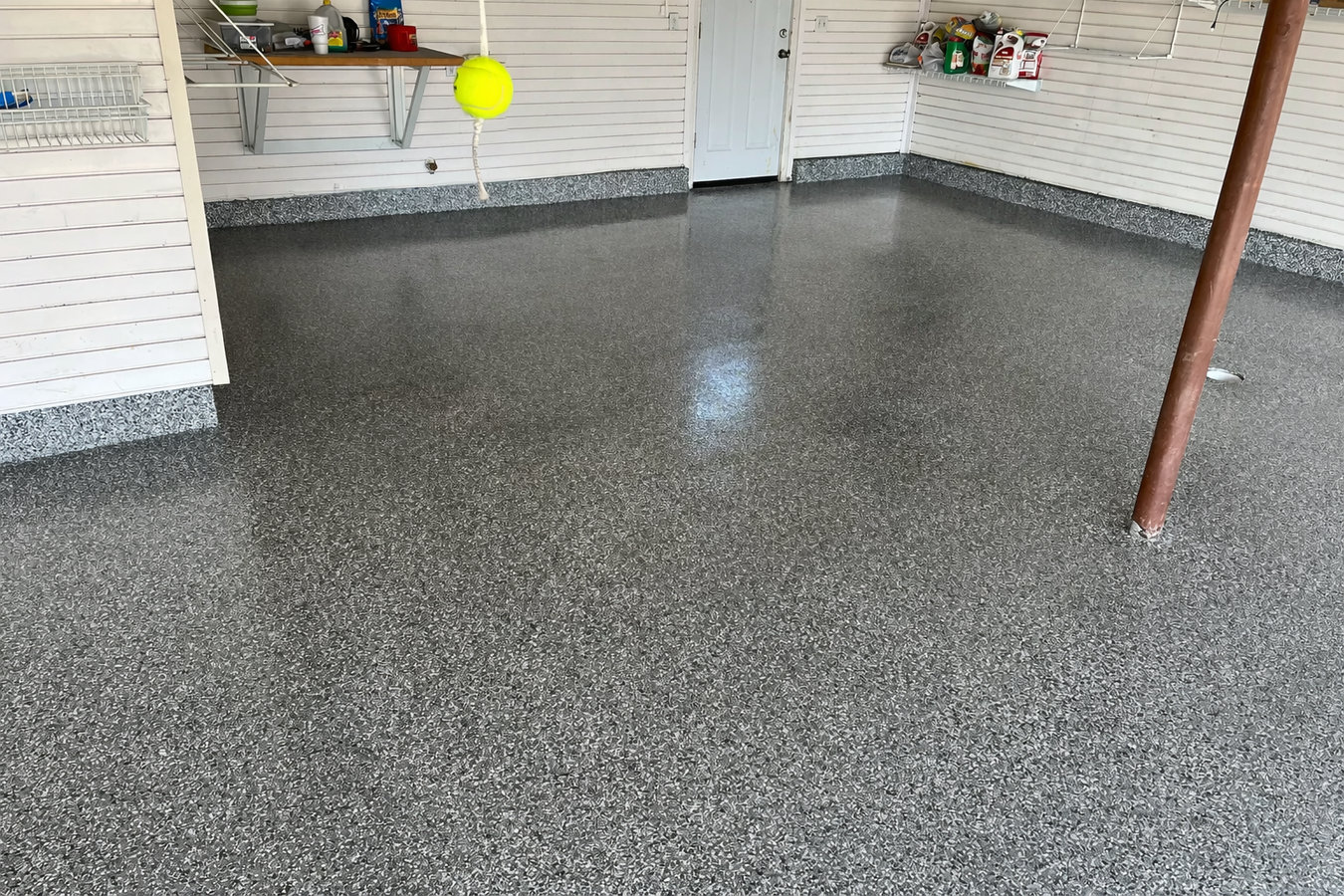
Old cracked slabs fail fast in Rhode Island winters. We pour garage floors built for freeze-thaw cycles, pull every permit, and prep the base right the first time.
Garage floor concrete in Johnston, RI means removing the old slab, compacting and grading the base, and pouring fresh concrete finished flat with proper control joints - most standard two-car garage jobs take one day of active work, then a week before you can park on it.
A lot of Johnston homes were built between the 1950s and 1980s, and those original slabs are now old enough that cracking, flaking, and settling are common. Patching only buys time on a slab that is already failing. If you have noticed the surface getting worse every winter, a full replacement is usually the more practical path.
We also offer decorative concrete finishes for homeowners who want more than a plain gray slab - coatings and surface treatments can be applied once the new pour has fully cured.
Small hairline cracks are normal, but if you can fit the edge of a coin into a crack - or if a crack has been getting longer over the past year - the slab is moving or failing. In Johnston, this kind of cracking is often driven by the freeze-thaw cycle working on an older, thinner slab.
If your floor is shedding - chunks or flakes coming off, or a gritty powder every time you sweep - that is called scaling, and it means the surface has been compromised. This is extremely common in Johnston homes built before 1990, where road salt and decades of freeze-thaw cycles have worn through the original finish.
A properly poured garage floor is either flat or very slightly sloped toward the door so water drains out. If you see puddles forming in the middle of your floor, the slab has settled unevenly. Standing water speeds up further damage and can seep under the slab, making the problem worse over time.
If you can feel a noticeable bump or dip when you walk across the floor, or your car tilts slightly in the same parking spot, the slab has shifted. In Johnston, this often happens when the soil base has moved due to frost heave - the ground literally pushing up from below during a hard freeze.
Our garage floor work covers the full job - demolition of the existing slab if needed, base preparation, the pour itself, control joint cutting, and surface finishing. We also handle permits with the Johnston Building Department before work starts, so there are no stop-work surprises mid-project. For homeowners who want a finished look, we pair garage floor pours with decorative concrete coatings applied after the slab has fully cured.
We also work with homeowners who want to upgrade other concrete surfaces at the same time. If your garage floor needs replacing, your concrete floor installation in an adjacent space - a workshop, utility room, or basement - can often be scheduled together to save on mobilization costs. Every pour uses a mix rated for New England freeze-thaw conditions.
Best for homeowners with cracked, heaved, or severely scaled concrete - old slab out, solid new pour in.
For new garages or additions where no slab exists yet - base prep, forms, pour, and finish in one scheduled project.
For homeowners storing heavy equipment, RVs, or trucks - a five- to six-inch pour that handles the extra load without cracking.
For homeowners turning the garage into a workshop, gym, or finished room - a clean, level pour that is ready for flooring or coatings.
Johnston experiences dozens of freeze-thaw cycles every winter - temperatures drop below freezing at night and rise above it during the day, repeatedly, from December through March. Each cycle puts stress on concrete: water seeps into tiny pores, freezes, expands, and chips the surface from the inside out. For homeowners here, the quality of the concrete mix and the surface finish matters enormously. A properly sealed, dense slab will last decades while a poorly finished one can start flaking within a few winters. The road salt tracked in on tires and boots all season makes the damage happen faster. If your floor was poured before 1990, it is worth having someone take a look before another winter goes by.
We serve homeowners throughout Johnston and the surrounding area. If you are in Cranston or Providence, we cover those areas too. Johnston's glacially deposited soils - a mix of sandy loam, gravel, and occasional clay pockets - can hold moisture and shift with seasonal temperature changes, which is exactly why proper base preparation before the pour matters as much as the concrete mix itself.
We ask a few basic questions - garage size, whether there is an existing slab, and what you are planning to use the space for. We reply within one business day and schedule a free on-site visit to measure and assess conditions before giving you a written estimate.
We look at the existing slab, check for settling or damage, and assess what is underneath. If a permit is required, we handle the application with the Johnston Building Department - this typically adds a few business days before work can begin, but it protects you at inspection and resale.
On the work day, we remove the old slab if needed, compact and grade the base, then pour fresh concrete. We spread it evenly, finish the surface, and cut control joints. Active work for a standard two-car garage typically takes one full day.
You can walk on the floor within 24 to 48 hours, but no vehicles for at least seven days. We walk through the finished job with you before we leave - explaining the control joints, the curing timeline, and when to apply any sealer you are planning.
Call us or send a message. We reply within one business day, give you a straight written estimate, and handle every permit. No pressure, no obligation.
(401) 586-9004Johnston requires permits for structural concrete replacement, and we handle every application before a single shovel hits the ground. That means the work gets inspected, and you have paperwork protecting your home's value at resale - not a headache you find out about later.
We use a concrete mix designed for cold-weather performance and finish every slab with a sealer suited to the freeze-thaw stress Johnston puts on outdoor and garage surfaces. The Portland Cement Association standards we work to are the same ones used for commercial and public infrastructure across New England.
Johnston sits on glacially deposited soils that include clay-heavy pockets - soil that holds moisture and shifts with seasonal temperature changes. We assess the base before every pour and add compacted gravel fill where needed. Skipping this step is the most common reason garage floors crack and settle within a few years.
We have been working on homes in Johnston and the surrounding Providence County area long enough to know the local housing stock well. We understand the permit process, the soil conditions, and the seasonal timing specific to this area - not just concrete work in general.
Every one of those factors adds up to a finished floor that holds up through years of Rhode Island winters, not just the first one. When you call us, you get a straight answer, a written estimate, and a crew that shows up on schedule and finishes the job completely before moving on.
Upgrade your garage floor or outdoor surfaces with stamped, stained, or polished finishes that look sharp and hold up through Johnston winters.
Learn MoreNew concrete floors for basements, workshops, and utility spaces - poured level and finished to your spec, permits included.
Learn MoreCall now or send a message to lock in your project date - spring and summer slots fill quickly and we want to get your slab on the schedule before the rush hits.