Loading...
Serving Johnston, RI and surrounding areas. (401) 586-9004
Adding a deck, garage, or addition? It all starts below ground. We pour concrete footings in Johnston, RI dug below the frost line, with full permit handling and pre-pour inspections so your project passes the first time and stays stable through Rhode Island winters.
Concrete footings in Johnston, RI are the underground bases that hold up decks, additions, porches, and garages - dug at least four feet deep to get below the frost line, formed, reinforced with steel, and poured so the structure above stays stable regardless of how many times the ground freezes and thaws. Most residential footing jobs are completed in one to two days of work, plus the curing time before building can start.
Johnston's housing stock includes a significant number of homes built in the mid-20th century, when footing requirements were far less strict than they are today. If you are adding to an older home or replacing an existing structure, there is a real chance the current footings will not meet modern standards - and an inspector may require upgrades before approving new work. If your project ultimately involves a larger structure with a full foundation, we handle foundation installation as well, and we can help you understand which approach fits your project during the estimate visit.
If you can see a gap opening between your deck and the house, or the deck surface has started to slope noticeably, the footings underneath may have shifted. In Johnston, this often happens after a hard winter, when repeated freeze-thaw cycles push footings that were not buried deep enough. A shifting deck is a safety hazard, not just a cosmetic issue.
When a footing settles unevenly, the structure above it shifts - and that movement usually shows up first in door and window frames that go slightly out of square. If a door that used to close easily now sticks, or a window has developed a gap at one corner, it is worth having a contractor look at the footings supporting that part of the structure.
Johnston's clay-heavy soils in some neighborhoods hold moisture and shift seasonally, putting stress on footings and the slabs or walls they support. Horizontal or stair-step cracks in a concrete or masonry wall near an addition are a sign worth taking seriously. A contractor can assess whether the footing has moved and what it would take to stabilize it.
Any new structure attached to or near your home needs proper footings before anything else can be built. If you are getting quotes for a deck, sunroom, or garage in Johnston, the footing work is the foundation of that project - literally. Skimping here to save money upfront is the most common reason outdoor structures develop problems within a few years.
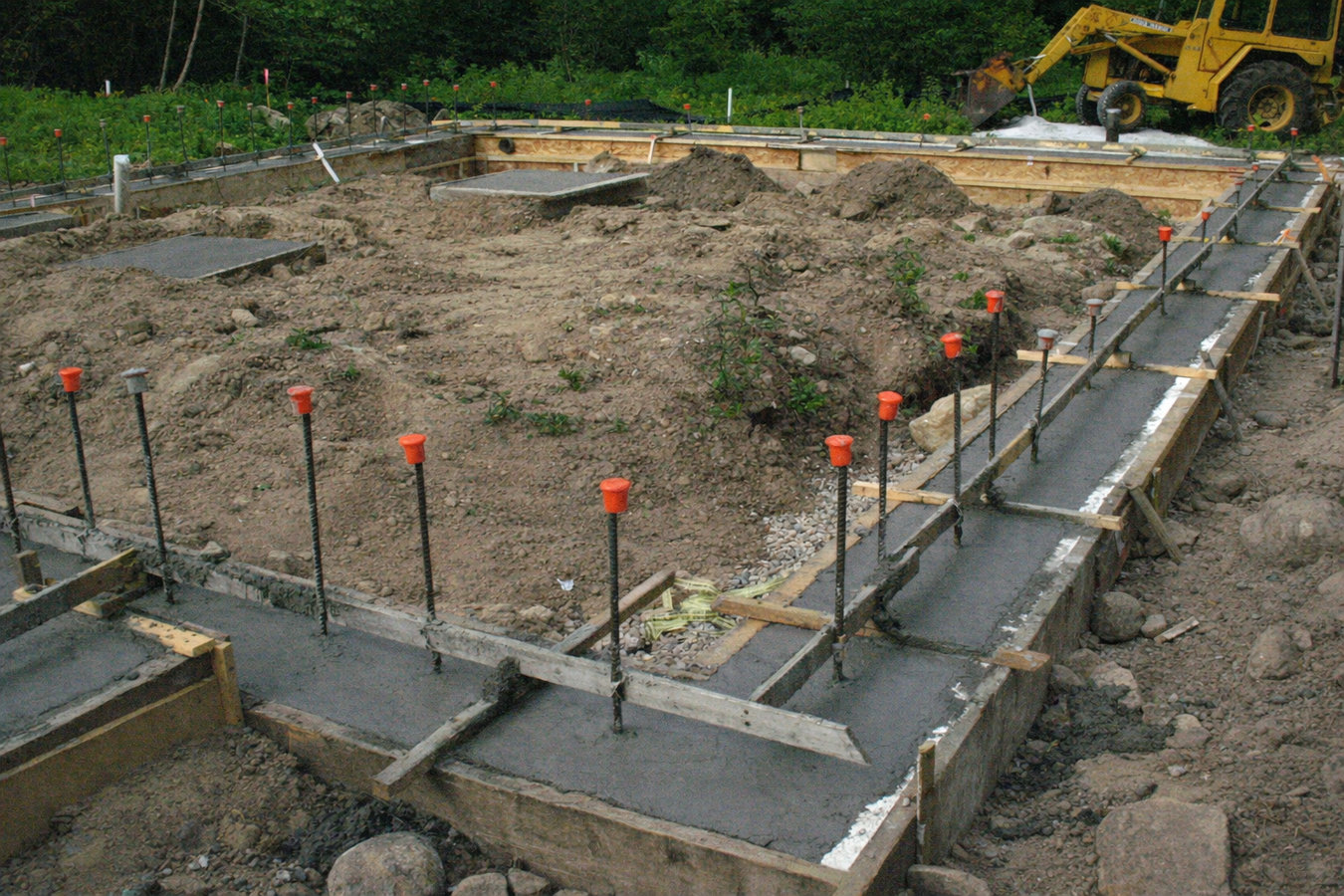
We dig, form, reinforce, and pour concrete footings for residential projects across Johnston. Every footing we pour goes at least four feet down - below Rhode Island's frost line - so the freeze-thaw cycle that shifts and cracks shallow footings simply does not apply to yours. We set temporary forms to shape the concrete to the right dimensions, place steel reinforcing bars where required by the project scope and building code, and pour in a single sequence to avoid weak joints. Johnston's soil is a mix of glacial deposits that can include clay, gravel, and solid ledge rock, so we assess your specific site before quoting and build a contingency into the estimate for unexpected excavation conditions - no sticker shock mid-project. If your footing project connects to a broader foundation scope, we coordinate with our foundation raising work so the structural base of your project is handled in one consistent scope with one crew.
We handle the full permit process with Johnston's Building Department - including the pre-pour inspection, which happens while the excavation is open and visible. That inspection is your protection: it means an independent official confirms the depth, size, and reinforcement are correct before the concrete goes in and covers everything up. We also notify Rhode Island's Dig Safe program before any digging begins, which is required by state law. If we are working during a cool spring or fall - common in Johnston - we have cold-weather protection practices in place so the concrete sets correctly even when overnight temperatures threaten to dip below freezing.
Best for homeowners adding or replacing a deck, covered porch, or screened room that needs a stable base below the frost line.
Best for sunrooms, bump-outs, and attached additions that need new footings tied into or alongside the existing home's foundation.
Best for detached or attached garage projects where the slab and structure need below-grade footings to meet current code requirements.
Best for older Johnston homes where existing footings have shifted, cracked, or are no longer adequate for the structure they support.
Rhode Island's frost depth is among the deepest in southern New England, and Johnston's inland location means it can be slightly colder than coastal communities. Footings must go at least four feet down to stay below the freezing zone - this is non-negotiable for any structure that needs to pass a Johnston building inspection. A contractor quoting shallower footings without a specific engineering justification is cutting a corner that will show up as movement and cracking within a few winters. Beyond depth, Johnston's soil is shaped by glacial history - a patchwork of gravel, clay, and ledge rock that can vary within a single yard. You might have easy digging in one corner and hit solid rock two feet down in another. Experienced crews in this area plan for that variability rather than being surprised by it. Homeowners in Pawtucket and Woonsocket face similar soil and frost conditions, and we work across the region with the same preparation on every project.
A large share of Johnston's homes were built in the mid-20th century, when footing requirements were less stringent than they are today. If you are adding a deck or sunroom to an older Johnston home and the building inspector looks at the existing footings, there is a real possibility upgrades will be required before new work is approved. We flag this possibility during the estimate visit so you know what to plan for - not after the permit process is underway. Johnston also requires permits for most footing work tied to decks, additions, and garages. The pre-pour inspection the permit triggers is one of the most valuable protections available to a homeowner - it means a problem can be caught and corrected while the excavation is still open, rather than after the concrete is in the ground.
We start with a brief conversation about what you are building and where. Then we schedule a site visit to assess your soil, measure the area, and figure out how many footings you need and how deep they must go. We reply within one business day of your inquiry.
After the site visit you receive a written estimate. We pull the building permit from Johnston's Building Department on your behalf - standard practice that should be included in your contract. Permit approval typically takes a few days to a couple of weeks depending on the time of year.
We dig to at least four feet below grade, set forms, and place rebar where required. The building inspector visits before the pour to confirm depth and reinforcement - we schedule that inspection and have everything ready. Dig Safe notification happens before any digging starts.
Once the inspection is approved, we pour the concrete and level the tops. The cure period is typically three to seven days before framing can begin - longer in cool weather. We give you the exact timeline in writing and explain what to avoid while the concrete hardens.
Spring and summer slots fill fast - reaching out now means we can visit your site and get into the permit process before the busy season backlog builds.
(401) 586-9004Rhode Island's frost line is approximately 48 inches, and we dig to that depth on every footing job in Johnston - no exceptions without a structural engineering reason. Shallow footings look fine when they are poured and fail within a few winters. Depth is the single most important variable in footing quality, and we do not negotiate it.
Johnston's Building Department inspects footings before the concrete goes in. We schedule that inspection as part of every permitted job - so the excavation is ready, the inspector shows up, and your project moves forward on schedule without you managing the coordination. A contractor who skips the permit is skipping the inspection that protects you.
Johnston's glacial soil can go from easy digging to solid ledge within a few feet, and that uncertainty makes homeowners nervous about getting an accurate price. We visit your site before quoting, assess the conditions, and build a contingency into the estimate for unexpected rock or wet soil - so you know what you are paying for before any digging starts.
Johnston's spring and fall weather creates a narrow ideal window, but projects do not always time perfectly with the forecast. We follow the concrete cold-weather protection practices outlined by the American Concrete Institute when temperatures threaten to drop after a pour - protecting your investment rather than hoping for good weather.
Good footing work is invisible once it is done - which is exactly why it has to be done correctly before anything is built on top of it. Every step we take, from the permit to the pre-pour inspection to the depth of the dig, is there because the alternative shows up as structural problems years later. You can also read about concrete footing standards from the American Concrete Institute or verify any contractor's registration with the Rhode Island Contractors Registration and Licensing Board.
Lifting and stabilizing existing foundations that have settled or shifted - a complement to footing work when the structure above needs to be re-leveled.
Learn MoreFull poured concrete foundations for new construction and addition projects where footings alone are not enough to carry the load.
Learn MoreFooting season is short in New England - schedule your site visit now so you are not waiting on permits when the weather is right to dig.